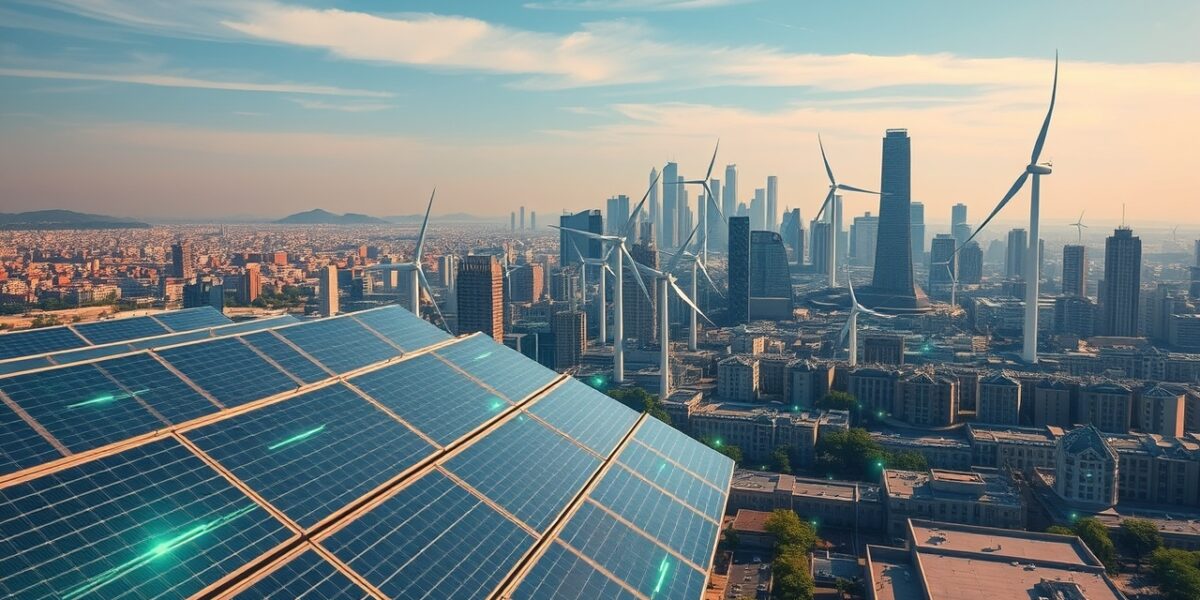
The Future of Renewable Energy: Innovations and Challenges
In the past decade, the push toward renewable energy has accelerated at an unprecedented pace. Governments, corporations, and consumers alike have embraced solar, wind, hydro, and emerging technologies as the cornerstone of a low‑carbon future. Yet, the journey from promise to reality is complex, involving technical breakthroughs, economic shifts, and societal adaptation. This article delves into the most transformative renewable energy innovations, the mechanisms that enable them, and the challenges that must be addressed to realize a truly sustainable energy landscape.
1. The Current Landscape of Renewable Energy
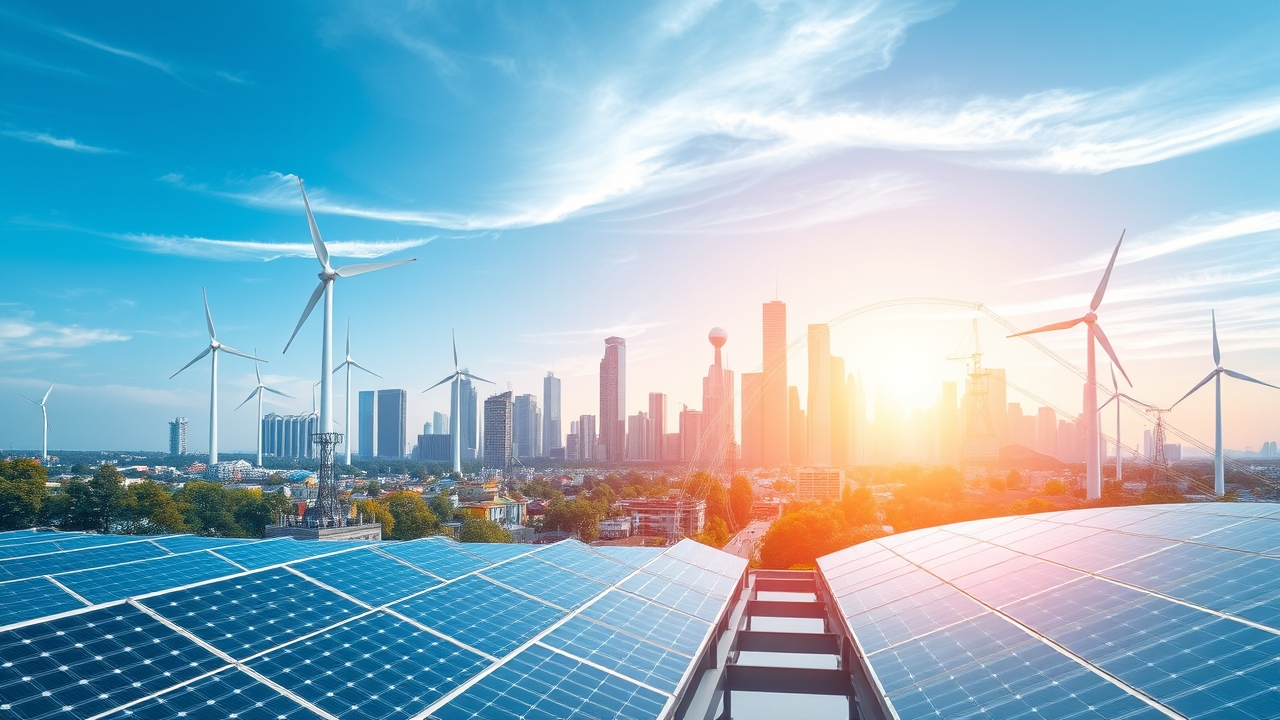
As of 2025, renewables supply roughly 30% of global electricity, a figure that has grown from 19% in 2010. Solar photovoltaic (PV) installations have become the fastest‑growing segment, while wind power—both onshore and offshore—continues to expand, especially in Europe and Asia. In addition, advances in geothermal, tidal, and biomass technologies are expanding the portfolio of renewable options. However, the intermittent nature of many renewables, coupled with uneven geographic distribution, presents a persistent challenge for grid stability and reliability.
2. Breakthrough Technologies in Solar Power
Solar energy has historically been the most accessible renewable, but recent innovations are pushing efficiency limits and reducing costs:



- Perovskite Solar Cells: Perovskite materials have achieved laboratory efficiencies exceeding 25% and can be manufactured on flexible substrates. Their low‑temperature processing allows for roll‑to‑roll production, potentially cutting material and labor costs.
- Multi‑Junction Cells: By stacking layers of different semiconductor materials, multi‑junction cells capture a broader spectrum of sunlight, achieving efficiencies above 40% in laboratory settings. While currently expensive, economies of scale and advances in deposition techniques are making them increasingly viable for high‑value applications such as satellites and concentrated solar power (CSP) plants.
- Solar Paints and Transparent PV: Researchers are developing photovoltaic inks that can be applied to surfaces like windows and building facades. Transparent PV cells enable buildings to generate electricity while maintaining daylight, opening new avenues for urban integration.
- Hybrid Solar‑Thermal Systems: Combining PV with thermal collectors allows simultaneous electricity generation and heat capture. This dual‑function approach improves overall system efficiency and can supply domestic hot water or space heating.
These innovations not only raise efficiency but also broaden the application spectrum—from rooftop installations to large‑scale utility projects and even consumer electronics.
3. Wind Power: From Conventional Turbines to Floating Platforms
Wind energy has matured from simple onshore turbines to sophisticated offshore platforms. Key innovations include:
- Floating Offshore Turbines: By anchoring turbines to floating platforms, developers can access deeper waters with stronger wind resources, unlocking vast new potential. The first commercial floating wind farm, located off the coast of Scotland, now supplies power to 50,000 homes.
- Blade Design and Materials: Advanced composites and aerodynamic refinements have increased blade length to 160 meters and reduced weight by 20%, boosting energy capture while lowering maintenance costs.
- Smart Turbine Control Systems: AI‑driven control algorithms optimize blade pitch and yaw in real time, maximizing output under variable wind conditions and extending turbine lifespan.
- Marine Energy Integration: Hybrid systems that combine wind with tidal or wave energy can provide more consistent output, especially in regions with high marine resource density.
4. Energy Storage: The Glue That Holds the Grid Together
Storage technologies are critical for mitigating the intermittency of renewables. The most promising developments include:
- Solid‑State Batteries: Replacing liquid electrolytes with solid materials improves safety, energy density, and cycle life. Companies are targeting 500 Wh/kg energy density, a significant leap from current lithium‑ion batteries.
- Flow Batteries
- Flow batteries, such as vanadium redox and zinc‑air, allow independent scaling of power and energy capacity. They are ideal for grid‑scale storage, offering long discharge times and rapid response.
- Compressed Air Energy Storage (CAES): Upgraded CAES plants use underground caverns to store compressed air, which is then released to drive turbines during peak demand.
- Hydrogen Production and Storage: Electrolyzers powered by surplus renewable electricity produce green hydrogen. The hydrogen can be stored in tanks or converted back to electricity via fuel cells, providing a flexible bridge between supply and demand.
Combining multiple storage modalities—batteries for short‑term balancing and hydrogen for long‑term storage—creates a resilient, flexible grid.
5. Smart Grids and AI‑Driven Energy Management
Smart grids integrate sensors, communication networks, and advanced analytics to manage electricity flow more efficiently. Key features include:
- Distributed Energy Resource Management Systems (DERMS): These platforms coordinate rooftop solar, storage, and electric vehicles, ensuring optimal dispatch and grid stability.
- Demand Response Programs: AI models predict consumption patterns and incentivize consumers to shift usage to off‑peak periods, reducing strain on the grid.
- Microgrids and Islanding Capability: Microgrids can operate autonom
For further reading, see related references on Wikipedia.
Leave a Reply